
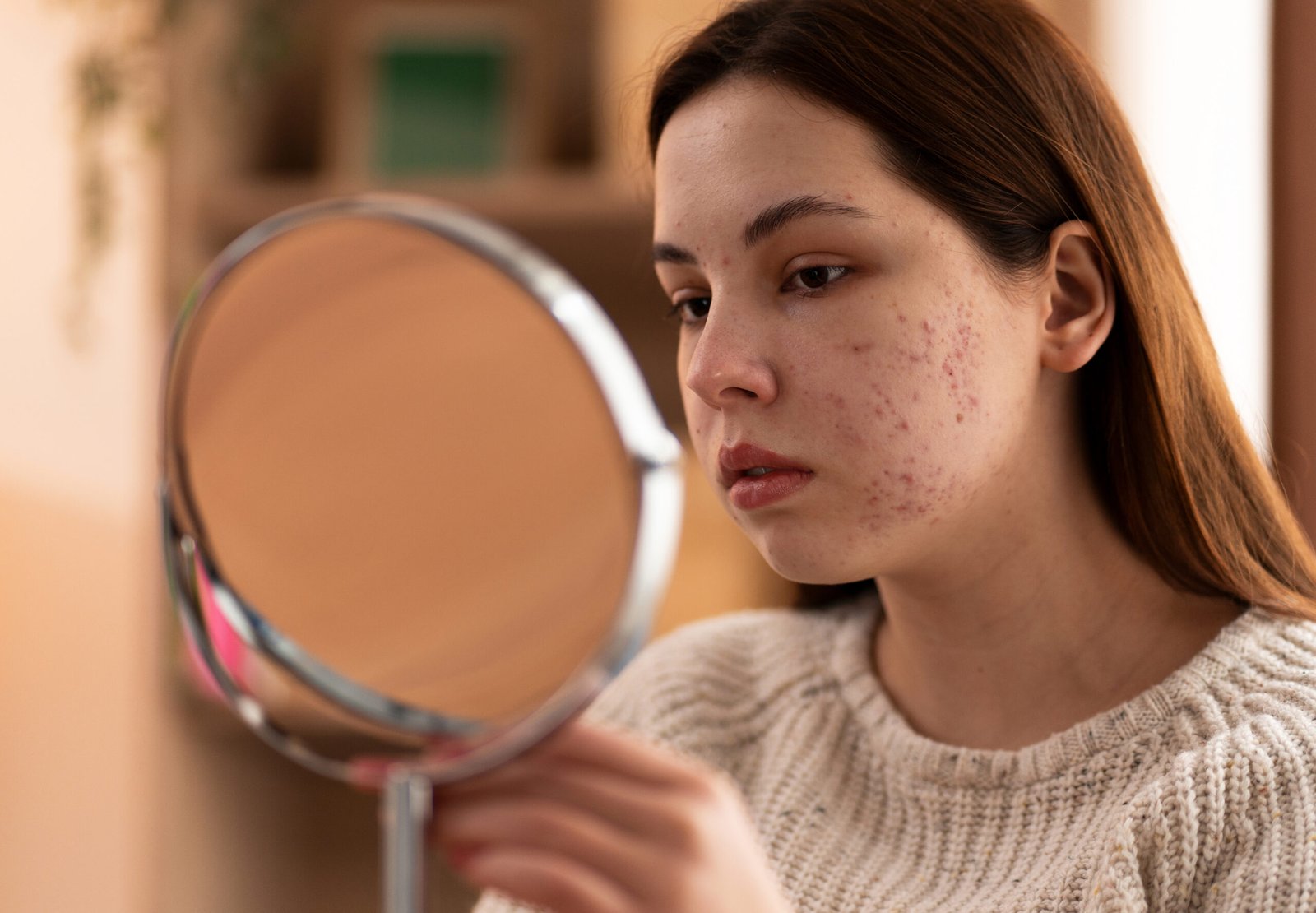
Hormonal acne is also known as Acne Vulgaris. Around 80% of people around the world become affected by this skin condition at some point between ages 15 to 30. As it occurs in adult age, people also call it adult acne. Its occurrence between the age 15 to 30 also denotes that it is associated with hormonal changes that usually happens during this age.
However, studies show that only hormones don’t cause acne vulgaris but some other factors like genetics, bacteria, skin cell abnormalities and stress levels also contribute to its progression. Medication, lifestyle factors such as your diet and physical activity can play a role in their treatment.
If you’re also worried due to progression of acne vulgaris, this article will help you learn about the factors that increase the risk of acne vulgaris occurrence and progression along with the types of food that should be eaten or avoided to control acne and the supplements required for reducing acne.
What is Acne Vulgaris?
Acne vulgaris is commonly known as acne, is well defined as a skin condition in which your facial skin is affected by rashes, inflammation, deep lesions, and most commonly blackheads and whiteheads. Its severity level doesn’t remain the same for all. You can classify it on the basis of severity of condition:
Mild Acne: This type of acne vulgaris includes the fewer number of inflammatory lesions or non-inflammatory lesions or both at a time.
Moderate Acne: This type includes occasional nodules, hard, painful lesions, inflammatory lesions or all along with mild scarring.
Severe Acne: This type shows the appearance of extensive inflammatory lesions, nodules or both along with scarring and ongoing moderate acne that has not improved with treatment after 6 months. This also includes the acne that causes complex psychological distress.
In your body sebaceous glands are present. These glands produce oil as they are tiny oil-producing glands. But the oil production is under the influence of some hormones. The oil produced by these sebaceous glands actually causes the appearance of acne on your skin. Thus acne often appears at those parts of the body which have or are near to the sebaceous glands including your face, neck, upper arms, chest and back.
In addition, if you come across a severe case of acne vulgaris, you may experience permanent scarring of skin, severe emotional distress and disfiguring. These conditions lead you to withdrawal from social situations and cause depression.
Studies show that the conditions usually affect the people in their teenage years, and continue to their adulthood. But some people experience acne throughout their life.
Causes of Acne Vulgaris
Several complex and multi-factorial factors contribute to acne. For example, when you have hormonal fluctuations or genetic predisposition, you may experience excess sebum production from your sebaceous glands that leads to bacterial colonization in your skin, inflammation, and follicular hyperkeratinization that further trigger acne.
From all these factors, the follicular hyperkeratinization a;so known as abnormal shedding of skin of skin cells, is the most serious complication of acne vulgaris. In this condition the upper skin cells of sebaceous glands and upper sections of hair follicles near the opening of your skin pores are damaged. This is considered the main cause of acne appearance. These skin cells clog the skin pores and cause a skin condition medically known as a microcomedone. This condition actually becomes severe when a bacterium, Propionibacterium acnes (P.cnes) usually grows on your skin starts growing abnormally and leads to inflammation, alteration of sebum, skin damage and follicular hyperkeratinization.
In addition, hormones also contribute to the development of acne. That’s why it is also referred to as hormonal acne. This idea can explain thoroughly that acne typically development occurs during adolescence because in this age the sex hormones levels increase due to puberty phase regardless of gender. Women and men all experience acne in their life span especially the phase where hormonal fluctuation is at higher level such as during puberty, and especially in women during pregnancy, premenopause or when they use hormonal birth control pills.
Moreover, research also claims that some other factors such as diet and inflammation also play a role in acne occurrence. However, some experts do not agree and propose that diet is not much significant in this case. But the presence of some strong evidence makes it sure that certain dietary changes play a significant role in acne treatment.
Experts suggested that certain medications and occupational chemical exposure also lead to acne development. But these acne types are different from acne vulgaris.
The Effective Diet Tips to Control Acne
Research has strongly agreed to the fact that creating some healthy dietary changes can help reduce acne symptoms.
In addition, some scientifically evidence based tips to control acne through dietary changes are have been jotted below:
Eat a lot of Whole, Nutrient-Dense Foods
Nutrient-dense foods are actually rich in anti-inflammatory ingredients. So it is a true idea that taking such foods is the best way to prevent and treat acne naturally. It is clear from the above discussion that inflammation is a major caste of acne development, eating anti-inflammatory diets can help reduce inflammation that is crucial for the treatment or prevention of acne.
You can prefer anti-inflammatory omega-3 fat sources such as chia seeds and fatty fish over potentially inflammatory omega-6 sources like soybean oil and canola oils to reduce acne symptoms.
In addition, incorporating some specific things like colorful vegetables and fruits to your meal plate is an effective way to decrease acne symptoms. These foods are rich in antioxidants and anti-inflammatory agents that play their role as skin-supportive nutrients. These may include vitamin C that is usually found in citrus fruits.
Moreover, processed western foods also increase the acne development risk. Avoiding such foods and replacing them with whole foods can help treat acne through diet. You should also avoid highly refined products to achieve flawless and acne-free skin.
Eat for Optimal Blood Sugar Control
Eating a low-glycemic-index diet is another important way to control acne. These foods help you regulate your blood sugar fluctuations that often cause acne development. Scientific research has strongly supported the theory that low-glycemic-index diets are effective for acne prevention and treatment. They say that glycemic index helps measure how slowly or quickly a food can spike your blood sugar levels. Therefore, eating foods with high GI, such as ice-creams, soda, sugary candies, cereals and white bread can cause an abrupt fluctuation in your blood sugar levels leading to exacerbating acne vulgaris.
In addition, consuming more sugary foods also causes an increase in the level of insulin, a specific hormone that shuttles sugar out of your blood and into your body cells to be used as energy currency. This expenditure of energy boosts other hormonal secretions including insulin-like growth factor 1. The uplifting of hormonal levels leads to hyperkeratinization along with excessive sebum release leading to worsening of acne symptoms.
Studies support the idea that eating high-protein and low GI foods can improve acne symptoms in people.
Moreover, studies also show that people living in Westernized populations use a lot of high-GI diets that are loaded with sugary foods and experience more acne while acne development is rare in populations who rely on traditional duets that don’t include much processed and refined foods. Thus, it is proved that limiting sugary foods and beverages along with refined carbs like white bread, bakery products and oats can help improve acne symptoms.
Cutting Out Whey Protein and Dairy Products
Research suggested that dairy products, especially milk increase the production of insulin and other hormones like IGF-1, that are well-known factors for increasing acne development. Increasing the intake of dairy products such as yogurt, milk and cheese regardless of frequency or amount is greatly associated with higher risk of acne.
Studies show that people drinking milk daily are more likely to develop acne than those who don’t drink milk. Similarly, many researchers have indicated that consumption of whey protein is strongly connected with acne development. Its use triggers the onset of acne.
Foods to Eat and Avoid
According to research, refined, processed foods, sugary foods and beverages and dairy products are linked with an increase in the risk of acne development. So, it is reasonable to prefer a whole, nutritious diet.
Foods and Beverages Good for Acne Prevention
Vegetables: Cauliflower, kale, spinach, and broccoli.
Fruits: Oranges, grapefruit, pears, banns, peaches and berries.
Whole Grains: Sweet potatoes, buckwheat, brown rice, farro, quinoa, and butternut.
Plant-Based Dairy Products: Almond milk, coconut milk, coconut yogurt, and cashew milk etc.
Legumes: Black beans, kidney beans, chickpeas and lentils etc.
Healthy Fats: Olive oil, avocados, nuts, nut butters, whole eggs,coconut oil etc.
Unsweetened Beverages: Green tea, hibiscus tea, lemon water, sparkling water etc.
High-Quality Protein: Tofu, eggs, shellfish, chicken. Salmon, turkey etc.
Anti-Inflammatory Herbs: Cinnamon, black pepper, ginger, turmeric, garlic and parsley etc.
Foods and Beverages Trigger Acne Development
Dairy Products, foods high in sugar and refined foods are not good for you, if you want to avoid acne vulgaris.
Sweet and Sugary Beverages: Cakes, cookies, table sugar, juices, sport drinks, and energy drinks etc.
Highly Processed Foods: Frozen meals, sugary cereals, microwave meals, white bread, fast food, meal bars, and chips etc.
Use of Supplements to Treat Acne
Addition of certain supplements like vitamins, minerals and other compounds can play a vital role in treating acne vulgaris.
Vitamin D Supplements for Acne Treatment
According to research, low vitamin D levels trigger acne development. It also supports the theory that vitamin D is a strong anti-inflammatory agent, that’s why its deficiency in the body leads to worsening of acne symptoms.
Other studies also found that vitamin D deficiency is strongly associated with acne severity. Studies also suggest that adding around 1000 IU per day vitamin D for 60 days consecutively can improve acne lesions.
However, you cannot take the supplement of vitamin D on your own. You need to visit your medical provider. They may determine if you’re deficient in vitamin D and then recommend the appropriate supplement dosage.
Green Tea Decreases the Acne Lesions
Green tea is rich in potent antioxidants and possesses a lot of strong anti-inflammatory effects.
According to research, adding green tea supplements to your daily diet can help reduce acne symptoms. Studies also supported the idea to take green tea extracts for one month to gain significant reduction in acne lesions.
Other Important Supplements for Acne Treatment
Vitamin D and green tea are some common supplements you can find easily to prevent acne but if your case is complex and you need a strong treatment supplement for improving the symptoms, you just need to read the following carefully.
Fish Oil: In expert’s opinion, fish oil containing omega-3 fatty acids are considered effective for acne treatment. However, some studies don’t support this theory as some people have experienced worsened symptoms after using fish oil.
Vitamin B: Vitamin B supplements play a positive role in preventing acne progression. However, high vitamin B injections can cause negative results.
Zinc: Studies show that taking zinc supplements orally can reduce acne severity. Zinc is also considered crucial for maintaining good skin health.
Conclusion
Acne Vulgaris is a skin disease that affects almost everyone at some point of life. It usually affects you during the puberty phase because at this age the sex hormones levels change abruptly. The hormonal fluctuations cause acne, reaches and deep lesions in your skin where sebaceous glands are located.
Sebaceous excretion, sebum has some chemicals that promote acne development. Certain medications, supplements and especially some dietary changes are helpful in acne control and prevention.
Experts suggest that eating a nutrient-dense diet, limiting sugary beverages and foods and avoiding dairy products are necessary dietary changes that can help you improve your acne symptoms. Certain supplements like vitamin D and vitamin B and Zinc also are considered crucial for acne treatment and prevention. Some lifestyle changes like reducing stress, quitting smoking, and getting good sleep also help improve acne symptoms.
You may try a few of the tips mentioned in the article to have significant improvement in acne symptoms.