

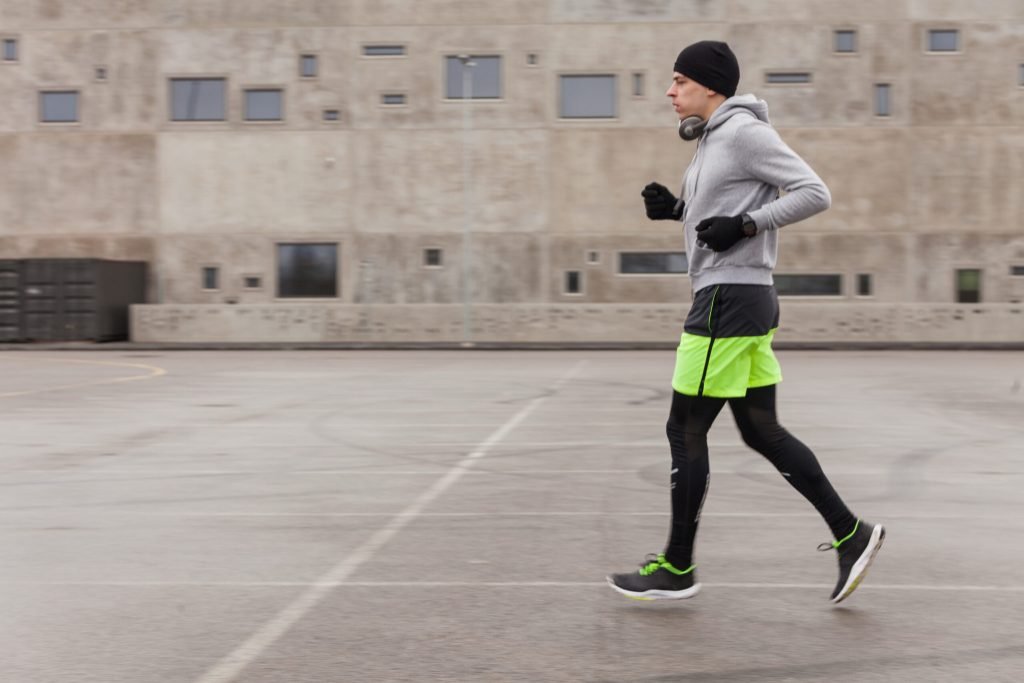
If you’re a runner, you must always aspire to be better as you were the day before. Whether you are a regular runner or a beginner, you always need a fundamental approach to improve your performance. But your Running Gait is a major factor that may affect your running performance. Your running gait is the way your feet strike and leave the ground. It plays a pivotal role in your running efficiency, injury prevention and overall performance.
So if you want to run better, longer and faster, check your running gait. It is the basic means to analyze your running firm. So that you may improve your endurance and running speed. Your running gait also helps redirect your running issues so that the risk of running injuries may be decreased.
This article will provide you deep insight into DIY methods to analyze your gait and interpret the result that can contribute to enhancing your running endurance. This means, at the end of this article you will be able to understand how to analyze and improve your running gait using traditional techniques and latest technology.
Lets learn how to run better and longer involving Running Gait!
What is Running Gait?
Running gait is a mechanical success of a leg traveling cycle during one step. You can simply take it as a running form that can be improved by increasing efficiency and decreasing risk of injury. More speed with less energy is the basic need for best running gait.
Lets understand it by visualizing!
The running gait cycle is divided into two phases:
- Stance phase .
- Swing phase.
Stance phase refers to the time when your foot initially makes contact with the ground until the whole body puts weights on that foot. This is known as the absorption period.
For example, imagine when you run, your right foot hits the ground that initiates a stance phase. As soon as your foot hits the ground,you slow down even if only for the shortest moment during the braking phase. Then you use the same foot to over-stride yourself. Now you’re entering the propulsion phase. When your foot leaves the ground, gravity affects you until the other foot hits the ground leading to a new stance phase. The other leg is in the swing phase. The cycle continues as you run.
After this the cycle transits to the swing phase of gait. When your foot leaves the ground, your body travels ahead of your foot. Your leg is traveling forward, flexing at the hip and knee. During this phase, for a moment your buddy is in the air like floating because it has no contact with ground. This is a floating period. Here running and waking get clearly differentiated.
Phases of Running Gait
One running gait cycle consists of two phases, stance and swing phases.
Understanding you keenly can help you interpret what happens during each phase.
Let’s have a closer look!
Stance Phase
The stance phase of running gait is further divided into the following:
- Initial contact.
- Mid-stance.
- Toe off.
Experts named initial contact with heel strike but variances in gait decides which part of the foot makes contact with the ground first. Everyone has unique gait. Therefore, you may have initial contact with heel sticky, mid-foot strike or forefoot strike.
Strides explain that initial contact makes your body and lower limbs to absorb force as your foot strikes the ground. Ground also exerts force on your body, known as ground reaction force, causing a strong impact on your gait cycle.
According to Bio-mechanics research, your knee and ankle muscles initially dampen the surface and protect your joints. This is the optimal point of contact with ground to minimize the impact force on the body. Variances depending on your footwear also impact the prices.
Researchers observed that heel striking or rear foot tend to be more influential in shoes as compared to bare-foot runners. The greater impact of heel strike than barefoot make the runners to shorten their strides and land with their forefoot first. After first contact, your dryer starts traveling over your leg and foot with a slight bend in your knees. You are entering mid-stance.
The mid-stage phase transits your body from its lowest point leading to absorption of force. Riots’ direction is towards the highest point so that more propulsive force can be generated.
At last, when you enter toe-off phase, your body gets ahead of your foot. Extension in ankle, knee and hip joints propel your body forwards. As a result, during the stance phase, your opposite limbs swing through. A limb usually sheds 45% time of gait cycle during stance phase but it’s shorter than swing chase.
Swing Phase
When your foot leaves ground, the force propels the your foot. That’s why it rolls in followed by knee flexion allowing optimal clearance of theft over the ground. The swing phase contains longer turns. The swing phase starts right after your foot leaves the ground and the other the foot makes contact with the ground again.
Thus means there’s a shortest moment when neither food is in contact with the ground. This is called overlapping of the swing phase of the feet, also known as float phase.
Float Phase
Float phase is actually a sub-phase also known as flight phase. It creates a difference between walking and running and occurs during the swing phase.
According to research, when you walk, one foot always remains in contact with the ground while running is a process where both feet leave the ground at the same time in every round of the psyche. So it is right this day that highly trained runners maximize the flight time by practicing hard. Most runners can increase a maximum of 10% of their flight time compared to untrained runners.
Arm Swing during Running Gait
Gait cycle also involves the arm opposite swing during the resistance phase. In this condition, the yarn perfumes a job to counterbalance the rotation of the opposite leg leading to proper running technique. This ensures the extended and advanced movements behind the torso at the same time.
What is Meant by Running Gait Analysis?
Running gait analysis is essential to understand the mechanics of running. The gout analysis during running helps you see components of movement, like the strides-length and placement of foot contact with the ground. The analysts also allow you to find out where your joints don’t support you and at which point the joints control the movements inappropriately.
For running gait analysis, you should look for the following components:
Frontal view may includes:
- Is there excessive rotation in your trunk during each leg advancement?
- Are your arms crossing the midline of your body?
- Do your knees get aligned with your feet?
- Is your pelvis dropping to the opposite side of the stance leg?
- Does your pelvis rotate forward excessively?
- Do your feet land just inside the width of pelvic region.
- Did your feet land excessively rolled out or in?
Side View
- Does your herald remain upright?
- Does your pelvic region forward excessively with each stride?
- Do your arms flexing ahead of and extending behind your torso?
- Dyes your trunk rotate excessively?
- Does your foot and in front of your body?
- Does your knee bend upon landing?
- Do your trailing knee and ankle bend properly for the swing phase?
Beside these limitations, some common issues are also associated with gait analysis, including:
Over-striding: That is also called landing with your foot ahead if you center your ass, insufficient arm swing, and excessive vertical translation of the center of the mass.
In addition, over-striding also points out when your foot lands in front of your center of mass. This further causes the braking effect on forward propulsion of the body. Excessive vertical translation of your body indicates that your upper body uses excess energy to bob up and down repeatedly. This causes hurdles in forward propulsion and causes high energy demand.
Moreover, arm swing perfumes the counterbalance character for opposite leg advancements. But when the arm swing is insufficient, the lower body shows excessive rotation which is less efficient.
Thus, running analysis helps you identify the abnormal movements that affect your running efficiency badly.
Effective Ways to Do A Running Gait Analysis
Filing a video of your running gait is the most effective way to analyze your running gait. The video helps you see through your movements during each phase clearly.For best results, make a video that captures the multiple ages of running, especially from back, front, right and left stages. You can do this by mounting a camera and running past it or running on a treadmill. You can shoot the running duration by using a camera mounted on the wall of room. Certain apps in house also allow you to analyze your ring form. You can view your running phase in slow motion as well as in real time. When you examine your gait thoroughly, you may understand the wrong movements. Having a professional view pint for your gout is most authentic and reliable. Thus it is the best method to get insight into your running style.
Here is a list of different options you might like:
Utilizing Latest Smart Technology
According to recent studies, outdoor gait training is more effective especially after an injury. The research has explored many beneficial impacts linked with foot-pod sensors that also help them gather information about participant’s running gait. They also allow you to see them using the way to hit the ground while running in real time. The technology allows decrease contact tie with the ground, decrease synonyms of lower erg pain especially in athletes, increase in cadence.
Your smart watch is the best gadget that has used information regarding cadence and high strides.
Clinical Analysis
If you are recovering from an injury, clinical analysts for running gait are the best option for you. In the clinic, your run is recorded , then physiologists, certified running coaches and physical therapists analyze it in slow motion. They often use a rather expensive option involving 3D motion-capture technology with a three site treadmill to study a high high level analysis. This type of analysis often takes four to five hours.
Video Analysis at a Running Shoe Store
Many general retailers and stores offer goat analysis which is usually free of cost. They record your running style on a treadmill for a few minutes and then analyze the running firm as you run. They do this within an hour. The analysis allows you to understand how your foot is striking on the ground and what shoe might work further to support you running better and longer.
Tips for Running Gait Analysis
Starting with your outfit, it is suggested that wearing loose or baggy cloth running can affect your gait. Prefer wearing clothing that confirms your body. This will allow a clear view of limb movement.
Taking multiple phases in front of the cable can help clear analysts. If you’re using a treadmill, start filming after a few minutes. This may ensure the runner is running naturally in a natural state and not is a pose for camera.
Film the video multiple times while running. For example, a day when your muscles are not troughs, and at the end of run to see the mechanical changes occur during a run.
Conclusion
Running gait analysis helps you run better and longer. It is an effective way to assess your running mechanics and also helps improve your endurance and running speed. Proper analysis of gait also helps lower the risk of injury during running. The two phases of running: stance and swing are alternative. Each phase proposes its own considerations for optimal bio-mechanics.
However, if you get an injury, it is better to consult a professional running coach or rehabilitation professional for proper recovery. One having specialization in analyzing movements can help you properly.
Making changes to your running style and firm can help improve running gait. Starting with small changes ,like having a natural relaxed arm swing, changing variables during running and adopting a multi-factorial change in bio-mechanics can result in improvements in your gait.