
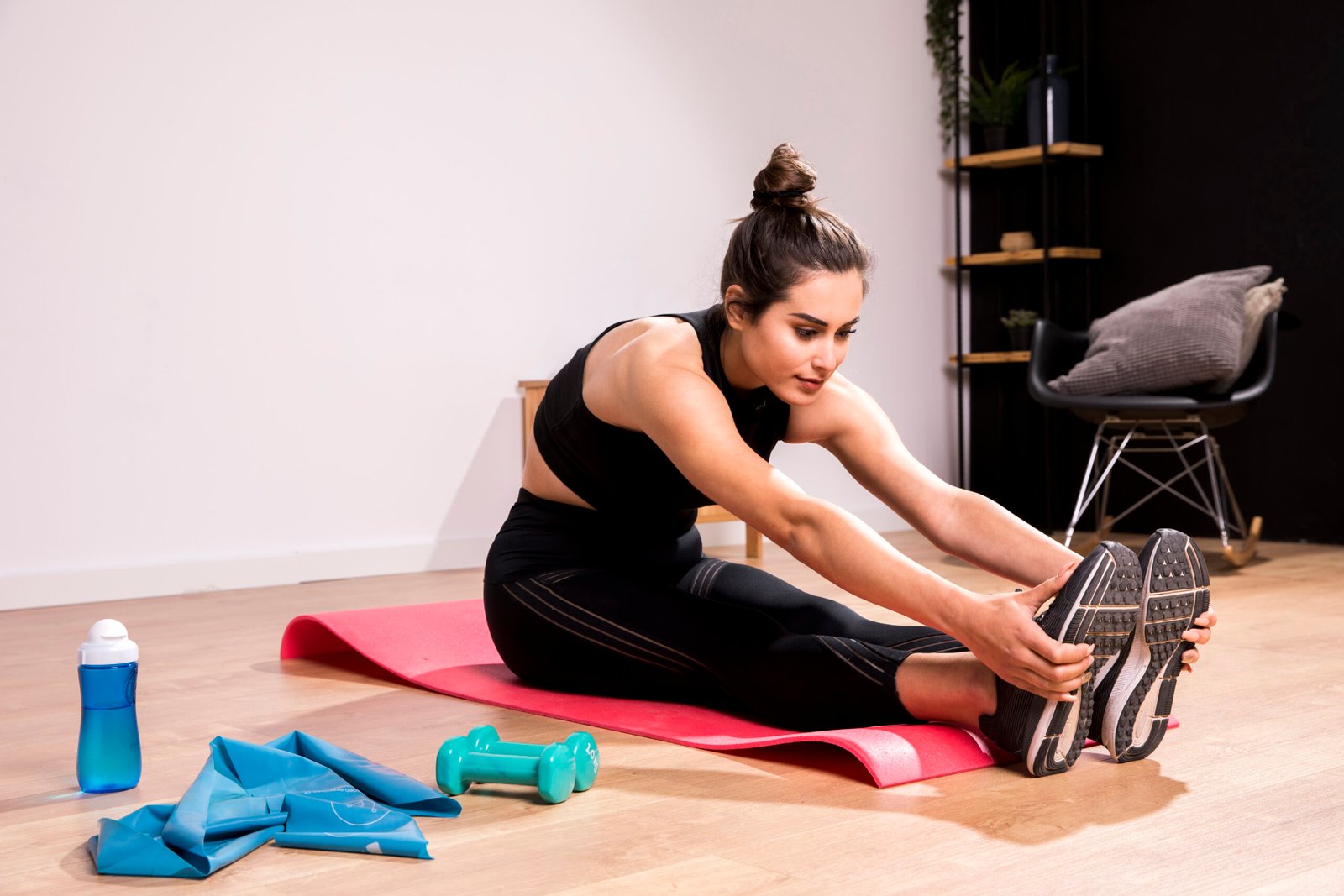
Regular physical activity is associated with many health benefits including better mood, lower risk of chronic diseases like heart disease and lower levels of blood sugar along with controlled blood pressure. Although these are fewer names of health benefits linked with exercise, there are a lot of other beneficial effects of daily workout that help you maintain a balanced and healthy life.
But the problem many of us face is the lack of motivation to stick to a balanced workout routine. First of all, if you’re not a regular exerciser, it may be a difficult thing for you to take an initiative as a beginner. Some people can’t start an exercise because they just don’t know where to start. Not knowing about the initiative step is the main hurdle in following an exercise routine. As there are many types of exercises, as a beginner you may get overwhelmed for choosing the best one for yourself. You may get confused and think, whether you take a start with running or yoga? Or what is better as an initiative HIIT or Pilates? Or what is the best physical activity for health benefits cardio or weightlifting?
These different types of exercise make you confused and often people become hesitant because they’re unsure where to start. If you’re one of them, let this article be your guide to working out.
Overview
Starting an exercise needs an initiative that is the understanding of different types of exercises and how to add the best one into your weekly workout routine. You may join a fitness class or workout sessions as a first step to start exercise. Initially, you can do mini-workout that can be converted into long-term habit after some time.
It is a common observation that regular physical activity helps maintain your health. This also means that execution provides a boosting agent for your mood, metabolism, mental health, and sleep. A long-term regular routine of exercise helps you achieve a balanced weight, improve muscular mass and strength and also reduce the risk of disease.
Here’s the information you need to start exercising and how to stick to a workout routine.
Types of Exercise
Various types of exercise include:
High Intensity Interval Training (HIIT): This is a popular and most effective type of exercise in which you can repeat short bursts of high intensity exercise followed by low intensity exercises or rest periods.
Aerobic Exercises: This type of exercise includes continuous movement that eventually increases your breathing and heart rate. People also know this type of exercise with the name of cardiovascular exercise. Swimming, dancing and running are examples of aerobics.
Flexibility Exercises: These exercises are associated with maintenance of range of motion, quick muscle recovery and prevention of injuries. Muscle-stretching movements and yoga are its cinnamon examples.
Strength-Training: If you want to increase your muscle power and improve the strength and thickness of muscles, you should do strength training exercises. Common examples include weightlifting, resistance training, sprinting and plyometrics.
Boot Camps: These types of exercises include a combination of resistance and aerobic exercises that are also time based.
Balance or Stability: Muscle strengthening and improved body coordination can be achieved by practicing balance stability exercises. Unilateral exercises, tai, core-strengthening excuses, chi poses and Pilates are examples of these types of exercises.
Calisthenics: These are the special movements that you can make without using gym equipment. You just need to move your large muscle groups to do these exercises at a medium aerobic pace. Lunges, push-ups, pull-ups, and sit-ups are common examples.
You can perform these physical activities individually as a beginner. The important thing is to choose the best exercise that not only proves beneficial for your health but also you can enjoy it as a fun activity.
How to Get Started?
Before starting an exercise, you should pay attention to some things, like:
Check Your Health
Whenever you make a plan to incorporate some exercises into your workout routine while you’re a beginner, it is important to speak with a professional healthcare provider to get a physical examination. This step is essential for you because you’re not familiar with vigorous and strenuous physical activities and their impacts on your body. The thorough checkup can help you identify any health problem that can prove injurious to your health or cause injury during certain exercise.
Proper checkups also help your personal trainer to optimize your workout and understand your body’s limitations as well. Thus they can make an effective exercise plant tailored to your particular needs.
Make a Plan and Set Realistic Goals
Exercise is a pre-planned thing. You can’t start it without setting a goal. Creating a plan is the most important step before starting an exercise routine. However, the goals should be easy and attainable at the start, especially if you’re a new newcomer. So, make a plan with easy steps to follow and continue building on it. This may help you improve your fitness level with passage of time.
For example, if you start with a run, you should include short runs initially. After finishing the short runs, you can increase the distance until you cover the total targeted distance. S, this explains that initiating your exercise with small. Achievable goals may increase your opportunities of success. Win win position is a great motivation to get stuck to a goal.
Make Exercise a Habit
The most important key to success in a workout routine is to build a routine that is not a burden for you but an enjoyable activity that you can follow over the long term.
According to research. A long-term exercise routine needs:
- It should be enjoyable.
- It should be beneficial for your health.
- It should be adopted as a habit that provides you with a fun activity.
No doubt, incorporating new activities to your routine life is challenging especially if you’re not used to it earlier. Therefore, people often give up soon and think that they can’t do exercise regularly. Change in habits is not easy.
Experts suggest that considering your whole day schedule to see where you can adjust your exercise daily for 30 minutes is good to take a safe start. People commonly find it easy to make excuses in the morning, on their lunch break or after working hours. However, if you can fund exactly 30 minutes of fur extra daily, thereby adding 15 minus at start. You can add some mini-workout for these 15 minutes. This means creating an adjustable and flexible exercise schedule can help you perform the exercise daily at the same time. Choosing a perfect time that benefits you more is also necessary.
How Much Exercise is Good Initially?
Recommended physical activity for average adults may help you design a better workout plan for you. According to studies, 150 minutes a week with moderate-intensity exercises are enough for the beginners. But two days will be a rest day. This is a general guideline but your body is unique and the security needs of your body may be different from others. Therefore, you should speak with your healthcare provider and personal trainer to choose the best exercises that can help you achieve your health related goals easily.
So, it may be a moderate-intensity activity that gets your heart beat faster. More traditional light exercises such as walking, jigging, and swimming can be adopted as an initiative. For more vigorous and strenuous physical activities, you can do cleaning around the house, dancing, playing catch with your kids and gardening at home.
As any type of exercise increases your heart rate, you should speak to your doctor before incorporating a new exercise to your routine. This is more important for the people who have a history of cardiovascular disease.
Ideal exercise routine for a week include:
Resistance Exercises: Two sessions of 30 to 40 minutes weekly of resistance training exercises that can target even all of your muscle groups.
Aerobic Exercises: 150 minutes minimum of moderate exercise including cardiovascular activities or 75 to 80 minutes of high intense excesses.
Sample Exercise Plan for A Week
This is an easy-to-follow exercise plan for a week that doesn’t need any special equipment or accessories. You can perform these exercises within 30 to 40 minutes daily. This plan is also suitable for all fitness levels even for the beginners but you can make it challenging as you want. Lets start:
Monday: 45 minutes moderate brisk walking or pace jog.
Tuesday: Rest day.
Wednesday: 10 minutes for brisk walking. After that complete the following circuits. Don’t forget to take an arrest for one minute after each set.
- Stretch forward.
- Circuit No.1: 2-3 sets alternating 8-10 luges for each leg. Along with 10 sit-ups and 10 push-ups.
- Circuit No.2: 2-3 sets alternating chair dips followed by 8-10 glute bridge and ten 10 jumping jacks.
Thursday: Rest day.
Friday: Minimum 25-30 minutes moderate-pace jog or bike ride.
Saturday: Repeat Wednesday strength training circuit or try a new one like bodyweight strength training circuit.
Sunday: Minimum 40-45 minutes of long walk.
Top Tips for Beginners
- Stay Hydrated
Healthy hydration level is the main necessity of good exercise. You should continue drinking liquids throughout the day to maintain your hydration level. Experts suggest that adult men need around 4 liters of liquid or water daily while females require around 3 liters of water or liquids daily to maintain their good hydration level.
Your performance during a physical activity can be improved by replenishing fluids during exercise. It also helps maximizing recovery and preventing injuries. In hot temperatures fluoride tinting is the essential step when you exercise.
2. Optimize Your Nutrition
Another important aspect for preventing chronic health conditions and mating a healthy weight is to eat a balanced diet. Eating good and well-balanced nutrients boost your energy levels that ultimately help you perform well while doing exercise. In this way food impacts your workout and physical activity. Good nutrients support your muscle growth and recovery.
Stooges show that carbohydrates are the nutritional source that fuel your muscles before exercise. If you eat carbs after exercise, they assist the absorption of amino acids into your muscles during recovery along with replenishing glycogen stores.
In addition, proteins in your diet help fast muscle recovery, build muscle mass and repair tissue damage.
Moreover, consuming healthy fats can help prevent muscle loss, more fat burning, maintain blood pressure, control cholesterol levels and increase the energy levels.
3. Warm Up
Every time before starting an exercise, try to increase your body temperature. This is called warming up. This is the traditional thought that warming up before exercise provides many physical and mental health benefits. This also may help prepare your body for improved flexibility during physical execution and reduce the risk of injury. It helps make up your mind for better performance.
It is good to focus on raising your heart rate and targeting specific oats if your body gets warmed up. You can choose aerobic excesses, if you want to target your lower body parts. For example, half-squats, walking lunges and leg kicks are best aerobic for this purpose. But if your target are upper body parts, you should do standing push-ups and arm circles. According to experts, as a beginner, dynamic stretches are the best choice.
Conclusion
When you plan to start a new exercise routine, many hurdles you may face because change in habit and routine always proves challenging. But the most important factor is to stay motivated and stick to your goal for which you’re planning to have a proper workout routine. This is true, doing healthy physical activities in the form of exercise serves beneficial not only for your physical health but it also helps promote your psychological and mental health. It is a great source to prevent many chronic diseases and rid your muscles of stretch and flexibility.
There are many choices for you to select the best exercise for you according to your needs. But it is good to speak to your healthcare professional and personal trainer to design an effective exercise program for you. They will observe your medical history and focus on your body’s needs to create a beneficial workout plan for you. Thus, you just need to focus on your goals and try to adopt such physical exercises that provide you enjoyment and fun. So that you dint feel them bring or a burden. This thing will help you stick to your exercise routine. Another factor is to perform exercise with your friend or loved one whose company you enjoyed the most.