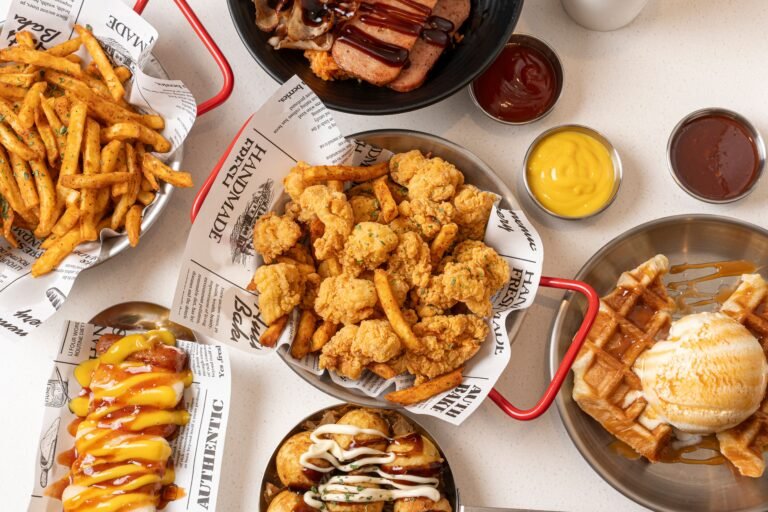



Flexible Dieting is a new trend in the weight loss field. According to this dieting plan you can eat any food, as long as it doesn’t disturb your calorie counting plan. Flexible dieting is based on a sensible theory known as, If It Fits Your Macros (IIFYM), it is considered that it is good for you and you can eat it without any concern. According to this theory, there’s no bad food as long as it suits your macronutrient needs. This diet plan is gaining more and more popularity in recent era because it is very near to nature. You can adapt it easily as it allows you to still indulge in your favorite foods as part of your eating plan.
If you want to follow Flexible Dieting, just try a way to approach it such as calculate your needs of calories per day and plan a meal on your own or subscribe to a flexible dieting website for setting a best meal plan according to your needs and desire.
So, if you’re interested in maintaining a moderate weight without leaving your favorite foods, you must follow a flexible diet. This article will help you explore the benefits and possible risks of this diet plan.
How Does Flexible Dieting Work?
Flexible dieting is a second extraordinary diet plan as it puts the control in your hands about your eating choices. This is actually not just a diet, it’s more like a lifestyle program. This means you don’t have to follow a specific diet chart while you’re following this diet. It doesn’t have any meal plans or food restrictions that you have to follow. It’s so simple.
Now, you’re wondering, if there’s no food restrictions then how you can lose your weight. It is obvious when you eat what you want, you don’t lose weight. But when you become a follower of flexible dieting, you calculate your calorie and macronutrient needs according to how much weight you want to lose. That’s why it is necessary to determine your total daily energy expenditure and macro-nutrients needs before beginning the diet. You can count your daily energy expenditure by using one of the “macro calculators” which are easily available on many online websites. However you can also do it manually to promote your flexible dieting.
Calculation of Daily Energy Expenditure
According to a calorie counter description, the total daily energy expenditure usually contain:
Resting Mode:
- Energy expenditure (REE): The number of calories you burn rest.
Non-Resting Mode:
- Energy Expenditure (NREE): The calories burnt during performing all life activities like exercise, digestion of food or walking etc.
Research shows that a normal person usually burns 60-70% energy at rest mode. While non-resting energy expenditure generally involves the energy expended during a physical activity like standing, walking, exercising, shivering and fidgeting.
So, as a dieter, you can calculate total daily energy expenditure to have an idea how many calories you burn in a given day. Flexible dieting recommends calculating your total daily energy expenditure to fund out the daily calorie needs. Several websites have made the formula equation through which you can calculate your total daily energy expenditure:
- For Women: (10 * weight in kg) + (6.25 * height in cm) – 161.
- For Men: (10 * weight in kg) + (6.25 * height in cm) – (5 * age) – (5 * age) + 5.
Your total calorie needs for a given day can also be calculated by multiplying the resultant of the equation with an activity factor. For example:
1. With sedentary life style:
- (little or no exercise): * 1.2
2. Light Physical Activity:
- Active (1-3 days per week): * 1.375
3. Moderate Physical Activity:
- Active (6-7 days per week): * 1.55
4. Very Active Life Style:
- Active (every day): * 1.725
5. Sternous or Vigorous Activity:
- Extra active (twice or more per day): * 1.9
If you want to lose weight, subtract the resultant percentage of calories you have calculated according to your physical activity from your total daily energy expenditure. This will provide you a calorie default to control your weight.
According to experts, the average range of the subtracting percentage is between 15% to 20% from the total daily energy expenditure. For example, as a dieter if your calorie needs have been calculated around 2000 calories per day, you need to subtract around 400 calories daily to lose your weight. However different websites give different percentages. Therefore, it’s up to you, you can decide your calorie deficit based on your individual weight loss goals and activity levels.
How to Calculate Your Macro-Nutrients Needs?
After determining the number of calories that you need to remove from your diet on a daily basis, the next step is to calculate your “macro” needs i.e your macro-nutrients. Macro-nutrients are the ones your body needs in larger amounts such as fats, carbohydrates and proteins. These are the most important nutrients for your body because they perform numerous vital functions in your body.
The details are jotted below:
Fats: A normal human body generally needs around 8-9 calories in the form of fats that is equal to 25-35% of total daily calorie needs.
Carbohydrates: A normal human body generally requires around 3-4 calories per gram from carbohydrate that is typically equal to 40-60% of total daily calorie need.
Protein: A normal human buddy generally requires 3-4 calories per gram in the form of proteins that is usually equal to 15-30% of total daily calorie needs.
If you try to find out the exact calculations on a website, you may know that there are several websites that are promoting flexible diets and selling their custom meal plans along with provision of “macro calculator”. These calculators help the users obtain a custom macro-nutrients distribution by plugging in their weight, age, height and activity level.
However, you can also do it on your own without using a calculator. You just need to break down the total calorie needs into percentages of fats, carbohydrates and proteins based on their specific gains to calculate your macros. Flexible dieting has an amazing feature that makes it more suitable for you that as a dieter you can tweak your macronutrient ranges depending on your weight loss requirements and your lifestyle activities.
If you’re looking to shed significant weight you may need to go with a lower carbohydrate range. However as an athlete, you may have to opt for a higher carbohydrate range.
In addition, as a follower of flexible dieting, you can also track your fiber intake, even though it’s not a macronutrient. Fiber is a type of carbohydrate that your body can’t digest. According to studies, 35-40 grams of fiber per day are essential for men and as a woman you need 20-25 grams of fiber per day.
What is Your Macro-Nutrient Intake?
After calculating your needs for calorie and macro-nutrients, you need to track your calorie and macronutrient intake if you;re following flexible dieting. But it is essential to being sure about your goals. You can do this in many ways, but the most authentic sure is using the websites or mobile apps available on market.
The food-tracking apps and websites have a huge collection that help you look up any food and portion size which not only help you determine calories within seconds but also give you a clear comparison between your needs and expenditure. These apps also help you track your meals and snacks without the hassle of writing them down.
So, when you make a plan to follow a flexible dieting, start it by developing a baseline of your calorie and macronutrient needs. Certain websites will help you determine how many calories and macro-nutrients you need.
Benefits of Flexible Dieting
This is the most advanced form of weight loss strategy that is attracting the attention of many people nowadays.
There are a number of benefits that make it the best choice for the people who are eager to lose their weight in shirt tie without any food restriction. Some benefits of this unique approach of dieting are as follows:
Easy to Follow
People often find it intimidating to calculate their calorie and macronutrient needs. No doubt it is the hardest part of dieting. But fortunately following the diet itself is easy and botherless. You don’t need to follow complicated food plans, meal recipes or endless lists of items that are often off-limits.
As a flexible dieter you just need to choose the food you like to eat, stay within your set calorie and macro-nutrients needed.
Helps Keep Weight Off Long-Term
Greater flexibility in food selection is the most beneficial and attractive aspect of flexible dieting. This thing helps you be more successful at keeping your weight off over time without any food limitations as compared to those who follow strict diets.
The more strict diets tend to negatively impact the psychological well-being of those who follow them.
No Foods are “Off-Limit”
There is a long list of strict diets that strict multiple foods. These diets make you resentful that you can’t indulge once in a while feelings of deprivation that often leads to frequent binges and cravings.
On the other hand, the flexible dieting sheds the good food versus bad food mentality. It contains many meal plans that help dieters develop a healthy and long-lasting relationship with their favorite foods.
Gives You Freedom of Choice
It would be very difficult for you to follow a super-restrictive diet, especially when you’re out with your friends or on the go. While flexible dieting provides you complete freedom with your food choices. It also makes it easier for you to stay on track, even at restaurants or parties when you have a limited range of food.
It is another aspect of dating that you may find it difficult to stick to for longer but the adaptable nature of flexible dieting can make it easier for you to follow it for a longer period of time.
Perfect Choice for Those Having Specific Nutrient Needs
If you have a problem to get specific with some macronutrients to achieve your weight loss goals, flexible dieting can make it easy for you.
For example, if you like to follow over-low carb or high-fat diets, flexible dieting helps you track your macronutrients needs.
In addition, people with specific fitness goals like athletes can also find it helpful for calculating their macro-nutrients needs baked on their training schedules.
Possible Downsides of Flexible Dieting
Though flexible dieting has become a popular way of weight loss due to its mat beneficial effects and aspects, it also also has some potential dark sides. Such as:
Too Losing Structure
People with strong self-control may find it as a blessing to have the freedom to choose their food while following flexible dieting, but some people have no self control, and they find it hard to hold themselves accountable for their own beliefs. As a dieter, if you want to choose as many unhealthy foods as the flexible-dieting plan allows you, you must stay within your calorie and macronutrients range. But when you achieve a calorie deficit along with losing weight while choosing nutrient-poor and unhealthy foods, your overall well-being and health may suffer.
So, it is necessary to keep highly processed foods to a minimum range and focus on nutrient dense food like fruits, vegetables, complex carbohydrates, healthy fats and lean proteins to stay healthy.
No Emphasis on Micro-Nutrient
Flexible dieting plans mainly focus on macronutrients. It totally ignores micro-nutrients which are just as important for your body to function optimally as the former.
Studies show that micro-nutrients contain vitamins and minerals that are needed in very small amounts for the proper functioning of your body organs. They are essentially required for certain processes in your body like disease prevention, assimilation of food and metabolism. A healthy diet plan is not considered complete without foods rich in micro-nutrients as well as some beneficial compounds like antioxidants.
Conclusion
Flexible dieting has become the most popular and easiest way to lose weight in the recent era. Its astonishing aspects of having a freedom for food choices and tracking and calculating your own calorie and macronutrient needs and expenditure has made it a most reliable and favorite dieting plan around the world. Dieters find it easy to choose their own food while they’re on their weight loss journey. Its plus point is that you can stick to your planned meal even if you are on the go.
However, like all other diet plans, flexible dieting also has downsides that can make the diet plan unhealthy for you in several aspects especially if you have no self-control over your food selection. But if you have a good understanding of your nutritional needs along with strong self-control, this due plan is perfect to help you achieve your weight loss target.