

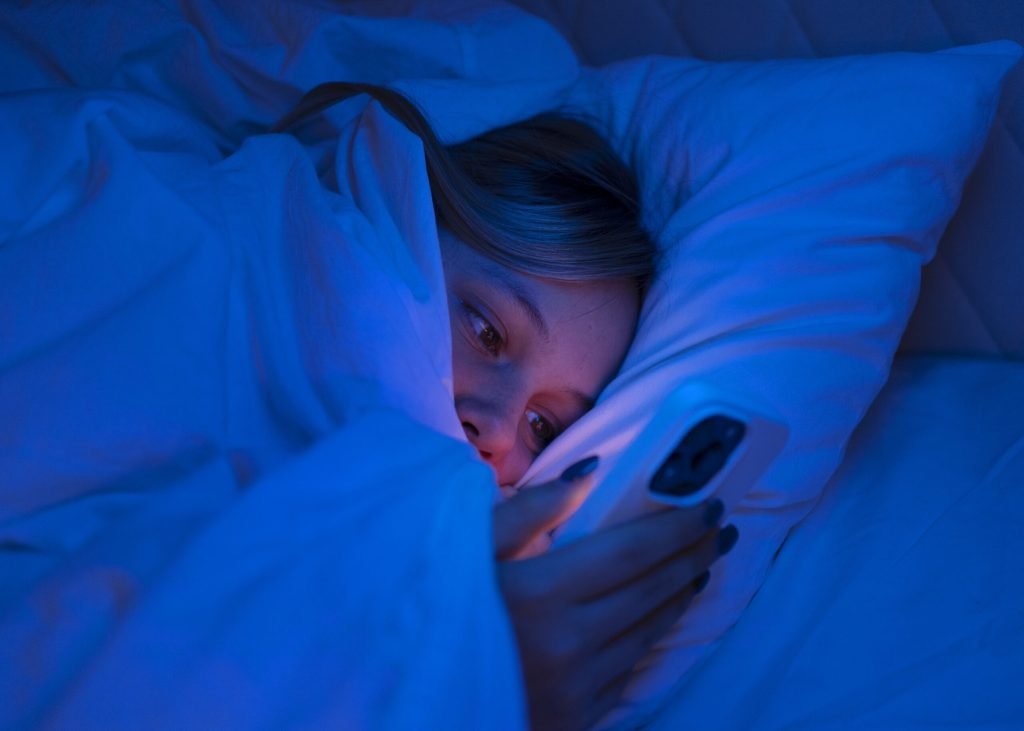
In the era of science and technology, poor sleep has become a common issue experienced by all. People are sleeping much less than they did in the past. Thus the less amount of sleep leads to a decline in sleep quality as well. Poor sleep causes several types of diseases like type 2 diabetes, heart diseases, obesity and depression. Considering the causes of less sleep can help resolve the issue of poor sleep quality. Experts have declared that the use of artificial lightning and lightning coming from your electronic devices at night have a great contribution in disturbing your sleep cycle. Electronic devices like televisions, computers, smartphones and tablets emit blue light that disrupts your circadian rhythm. Thus, blue light and sleep are greatly linked with each other.
According to research, the electronic devices emitting blue wavelength disrupts your sleep cycle by trucking your brain during the daytime. This increases the risk of unsatisfactory sleep. The screen time actually is harmful for your optimal brain health. Studies show that decreasing the screen time and exposure to artificial lights in the evening especially before bed time is an effective way to increase your sleep quality. Avoiding blue light at night also helps prepare your mind for sleep naturally.
In this article you may learn how to block the blue light at night to aid your sleep quality.
What is Blue Light?
Different types of electromagnetic radiation contribute to imposing light. As light is composed of different wavelengths (colors), your eyes easily interpret these colors of light based on the amount of energy they carry. As a whole light is invisible but as parts, you can recognize its different wavelengths (colors). This means the natural light coming from the sun known as white light is a combination of different colors that are detected due to the energy differences.
The visible light spectrum contains different portions. Blue light is one of those potions that is linked with sleep cycle, alertness and hormone production. Different electronic devices like fluorescent bulbs, LEDs and computers emit blue light.
How Blue Light Disrupts Your Sleep Cycle?
The internal clock of your body maintains circadian rhythm due to which you can follow a regular sleep cycle. This 24-hour biological cycle is associated with many functions of your body. This system also helps your body to evaluate when you need to rest and what time is best for being awake.
However, your circadian rhythm is also connected with eternal stimuli present in the surroundings including day light, darkness and weather conditions. The circadian rhythm effects from blue light to a great extent. Blue light influences your eye sensors that send signals to your brain’s internal clock. The brain receives the signal and becomes alert as it takes daylight.
Studies show that sunlight or white light is a mixture of different wavelengths but all of these have a significant amount of blue wavelength. During daytime, the blue light present in natural sunlight helps make you alert and promote your mood and performance for daily chores. Sometimes, sleep experts suggest using blue light gas therapy for depression and fatigue. Blue light has a great influence on your mood, sleep and efficiency.
But the blue light emitted from modern light LEDs or electronic devices like smartphones or computer screens can disrupt your internal sleep-wake cycle. Exposure to these devices in the evening can totally damage your sleep quality. So, when it’s getting dark, your brain secretes a hormone known as melatonin that tells your body to get tired and go to sleep. But blue light coming from some electronic devices tends to inhibit melatonin production leading to reduction in quality and quantity of sleep. Suppression to melatonin production, especially in the evening results in various health problems, like depression, cancer, cardiovascular disease, and being overweight.
The researchers of National Library of Health Sciences have declared through an article, published in 2023, that the human’s circadian rhythm finely follows a 24-hour cycle and influences several body functions accordingly. Light is the main factor that aligns the circadian rhythm. Therefore, sleep cycle and circadian rhythms are closely aligned with sunrise and sunset. The invention of artificial lights and electronic devices has influenced sleep checkers a lot. People have become used to exposure to increased amounts of lights before bedtime that directly affects their circadian rhythm. However, the largest and strongest impact is caused by blue light. Most devices make you get exposed to a lot of blue light that stimulates your parts of the brain that make you alert at nighttime. The blue wavelength has enough energy that it easily increases your heart rate and body temperature.
Although, during the daytime, the increased alertness is good for all because it improves your attention and performance. It sets up your circadian rhythm for better night sleep after sunset. Many sleep issues are resolved by exposing them to blue light strategically. Sleep disorders are created through timed exposure of blue light. However, when the exposure to blue light is not in alignment with your environment, our circadian rhythm disturbed.
Studies show that light therapy is an effective way to help realign your lost circadian rhythm to improve your sleep quality. But exposing yourself to blue light during hours near to bed time can hinder sleep by suppressing the melatonin production. This promotes wakefulness, drowsiness vanishes and you feel active. Blue light actually tricks your brain to think that it is day time. This circadian rhythm disrupts and you feel alert instead of tired. This alertness comes accompanied by many negative health issues, including mental health disorders and metabolic disorders. You can reduce the risk of such healthy conditions by mindful use of blue light during night and avoiding the exposure to blue light near bed time.
Devices Emitting Blue Light
Constant Interaction with Electronic Devices and working under artificial lights are common sources of sleep disruption. If you’re one of them, try to expose yourself to blue light strategically to avoid circadian rhythm disruptions.
Devices emitting blue light in large amounts include:
- LED lights.
- E-readers.
- Fluorescent lights.
- Video game consoles.
- Smartphones.
- Tablets.
- Televisions.
- Computer screens.
No doubt, it is difficult to stop using these devices completely but you can reduce the risk of nighttime blue light exposure through some simple methods.
Reducing the Effects of Blue Light at Night
Turning off the sources emitting blur light at night is the simplest way to reduce exposure to blue light in the evening. You can dim or reduce LED and fluorescent lights in your home and turn off electronic devices after it gets dark outside.
Some special types of glasses are also available that reduce exposure to blue light. But they may not work for everyone. Slime people also use amber glasses or blue light blocking gadgets to reduce melatonin-suppressing effects of bright light.
However, it is not always possible to turn off the source of blue light after dark. You can adopt some other methods to reduce blue light exposure that may interact with your sleep schedule.
Some tips to avoid exposure to blue light are jotted below:
Use a Different Lamp: If you’re fond of reading before bed. Use a lamp that emits orange or red light rather than blue. In this way you can enjoy reading in bed without disturbing your sleep cycle.
Improve Your Sleeping Environment: Dim or turn off all light sources in your bedroom. If it is not possible, use an eye mask to completely block the light.
Follow a Routine: Sleeping at a fixed time and waking up at regular set time can help you maintain a good sleep cycle. Set an alarm before going to bed. The alarm will help you ti remind off all light sources around you.
Try an App: If you’re in need to use electronic devices at night time. Try to use a smartphone or tablet that can reduce blue light emission.
Learn to Dim: Use the “night mode” on your electronic devices screens or dim the brightness of the screen to avoid exposure to blue light.
More Light Blocking Tips
Other than glasses, you can try some other ways to reduce blue light exposure at night including installing a program f.lux on your PC. This program has the modern technology to adjust the brightness and color of your PC, tablet or mobile screen that is usually based on your timezone. When the darkness prevails the program activates and automatically blocks all blue light from your device and gives your screen a faint orange hue color.
More apps for such programs are available for your tablets and smartphones. However, more beneficial tips to reduce blue light exposure include:
- Use a red or orange reading lamp that never emits blue light.
- Keep your bedroom dark completely and use a sleep mask.
- Turn off all the lights before bedtime.
But exposure to blue light during day time is necessary for you. If not easily available, try a blue light therapy device that is actually a light lamp that stimulates the sunlight to bathe your eyes and face in daytime.
Tinted Glasses for Help
The most effective and easiest way to avoid blue light exposure at night is using Amber-tinted glasses. These glasses offer complete blockage of blue light. Therefore, after using such glasses your brain never gets the signal to stay awake.
Studies suggest that using tinted glasses even in a lit room helps produce a large quantity of melanin that helps you sleep better.
Research shows that in the evening your melatonin level drops automatically, but when you are exposed to artificial bright lights at night, it blocks the melatonin production and you lose your sleepiness. However, dim light can’t harm much. Similarly, blue-light blocking glasses are an effective strategy to bring major improvements in your sleep quality.
Another 2024 study involving rubbing 30 people who used blue-light blocking glasses found that the people using blue light blocking glasses experienced greater improvements in their mood and sleep quality. Avoiding blue light minimum 2 hours before bedtime can help improve your sleep cycle. Many shift workers have found it useful to reduce blue-light exposure at night by using glasses.
In addition, people suffering from cataracts using blue-light blocking lenses have reported that they have experienced significant reduction in daytime sleepiness and improved sleep at night.
However, all strides do not support the use of blue-light-blocking lenses or glasses. Lack of high quality scientific evidence compels us to wait for more authentic research so that you may rely on these glasses completely to improve your night time sleep quality.
also read: https://onlinehealthpoint.com/postpartum-depression-in-parents/
Effect of LED Blue Light Exposure
Certain environmental factors like use of LED and compact fluorescent light bulbs can affect your eye health. These energy-efficient light emitting devices are much more energy evolving than old-fashioned simple light bulbs. Thus they tend to ride more blue light.
According to fluorescent light studies, it is better to replace high energy-emitting LED and bulbs with low energy light bulbs. The mechanical structure cannot be changed in these bulbs but the inside layer of coating can be changed that may help emit less blue light with warmer touch. No doubt LED lights are a more efficient source of light than fluorescent lights but they also produce a fair amount of blue light.
Studies suggest that using ordinary incandescent lights to replace LED lights can help improve the production of melanin by reducing blue light exposure at night.
Conclusion
Using electronic devices such as computers, smartphones and tablets at night before bed increases the exposure of blue light that inhibits the production of melanin hormone in your grain. The less production of melanin sends a signal to your brain and it gets alert assuming it is daylight. This is the way your sleep schedule and sleep quality get disturbed due to blue-light exposure at night.
Moreover, people having a history of sleep problems like insomnia, should avoid blue light exposure a minimum of 2 hours before bed time. So that they may get a peaceful and uninterrupted sleep.
Research suggests the use of Amber-tinted glasses can help improve your sleep quality as these glasses are particularly effective for blocking blue light coming from electronic devices at night.