


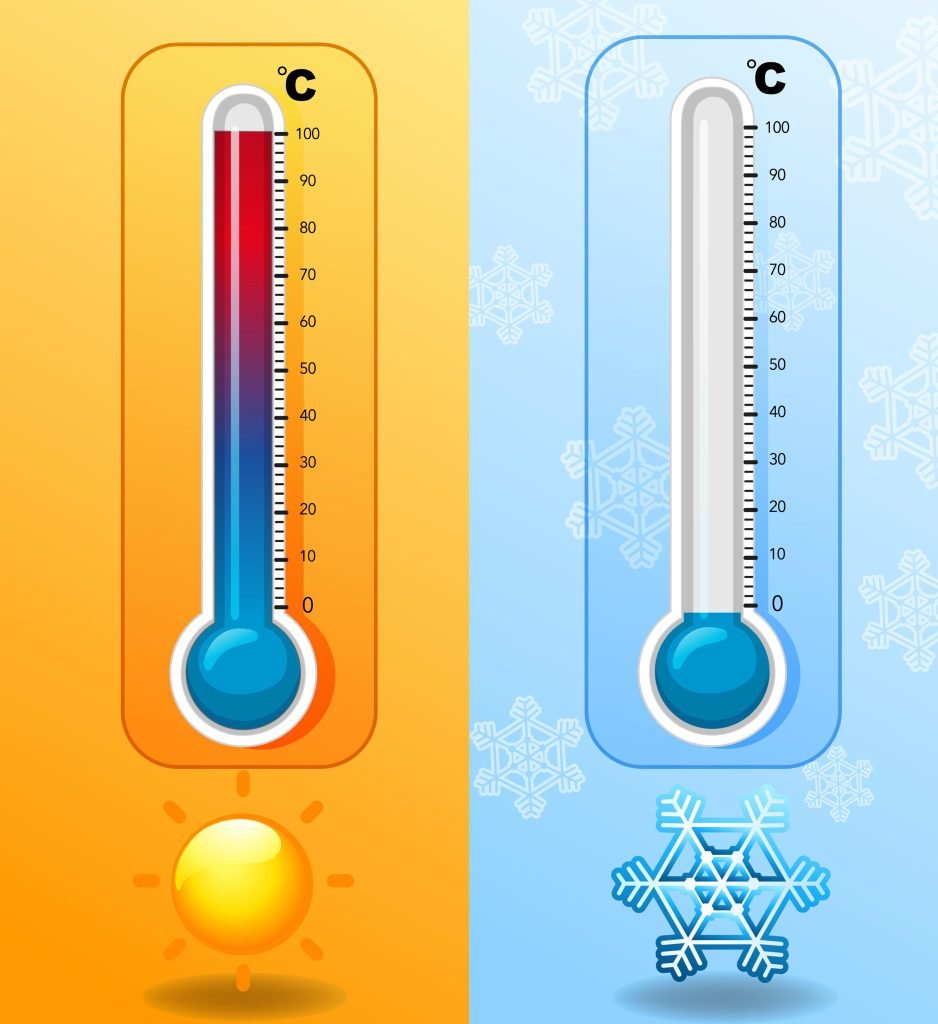
Extreme Temperatures and Your Health are closely related. Changes in temperature or weather conditions are the main causes of some serious health conditions. Preventive steps are necessary to manage the severe symptoms of these health related issues. Sometimes, it’s become very difficult to treat the symptoms but taking preventive measures can help you recognize the symptoms and learn how to manage them. Extreme weather is of two types: extreme hot and extreme cold, you need to be prepared for all sorts of weather i.e hottest days of year, coldest nights of the season, dry days or rainy days. Your body has an optimum range of temperature. It functions well at 37 ℃ that is equal to 98.6 degree Fahrenheit. Slight variations in temperature throughout the year or even day can disturb your bodily function.
Studies show that the lower middle part of your brain, called hypothalamus, helps maintain your internal body temperature (thermoregulation) throughout the day. The thermoregulatory procedure makes it possible for your hypothalamus to send impulses to your organs and skin through temperature sensors. These impulses help activate certain mechanisms in your body that keep your body hot or cold in specific circumstances. Your hypothalamus has the ability to adopt a wide range of temperature fluctuations. It can easily adapt to temperature variations. This is the reason that you bundle up yourself into many layers when it’s cold and in warmer temperature, you tend to use air conditioners and cooling fans to maintain your core body temperature.
However, sometimes your hypothalamus does not compensate quickly even when you are in an environment with extreme temperature. So it’s important to learn how to face and avoid any extreme temperature related health condition when your hypothalamus is not compensating immediately. This article will help you learn about what health concerns you may experience due to extreme temperature variations.
Humidity and Your Environment
Thermometer is commonly used for measuring your body temperature but often it is not a concerning matter to have fluctuated temperature according to thermometer reading. Because the relativity in the environment actually affects your brain activity and you feel that temperature. This is called a heat index.
For example:
- When your thermometer shows the range of 29 ℃ without humidity in the air, the index is 27.
- When the air temperature is around 20, with 90% humidity, your thermometer will show the temperature 36.
Similarly, wind speed a;so affects your body temperature. Therefore, this temperature reading is considered as an apparent temperature, not real one.
What is the Effect of Extreme Heat on Your Body?
High temperatures are dangerous for your overall health. Although your body has a systematized mechanism that regulates your body’s internal temperature, still high temperature can affect negatively. Your internal thermoregulatory system can maintain your body’s temperature to 37 even when environmental temperatures rise to 55.
According to research from the National Institute of Weather Changes, spending longer time outdoors for regular life activities or other physical exercises when the heat index is up to 27 or higher can cause certain health conditions like hypothermia, fatigue and fever.
Other risk of having high temperature include:
- Heat exhaustion.
- Heat strikes.
- Heat cramps.
The risk gets increased when the temperature crosses the limit of 39. Most of the heat stroke cases have been recorded at temperatures higher than 50.
Some heat-related health conditions are jotted below:
- Fainting.
- Heat rash.
- Heat swelling.
- Sunburn.
- Muscle cramps.
Symptoms of Heat-Related Health Conditions
What type of heat-related illness has affected you can help describe the symptoms of the disease. Type of heat-related illness also specifies the range of severity of health conditions.
Common symptoms of heat-related health issuers, include:
- Weak but fast pulse.
- Vomiting.
- Nausea.
- Heavy sweating.
- Lightheadedness and fatigue.
- Dizziness and blacking out while standing up.
- Exhaustion.
Symptoms of heatstroke are:
- Having a body temperature higher than 40 .
- Losing consciousness.
- Discolored skin that gets hot on touching.
- String and fast pulse.
Treatment and Management of Extreme Heat Health Conditions
Run for calling local emergency situations, whenever you find someone loses consciousness due to heatstroke or heat exhaustion.
The effective ways to manage the symptom related to extreme heat include:
- Keep yourself or the person cool with cold damp clothes.
- Take a small sip of cold water until the symptoms start fading.
- Try to get out of a hot environment.
- Stay in a low temperature environment where air conditioning is available.
- Avoid going outside and direct sunlight.
- Rest on a couch.
Whenever you get affected by a heatstroke, follow the instructions jotted below to treat the related condition:
- Cover yourself with a cold, damp cloth.
- Get out of the hot environment immediately.
- Stay at a place with a cold temperature.
- Avoid drinking or eating anything until you receive medical assistance.
- Avoid direct sunlight.
Prevention of Heat-Related Illness
Hydration is the most effective formula to treat or prevent heat-related health issues. Being well-hydrated is necessary to keep your body temperature within the optimum range, especially in hot times of the year or even a day. Dreaming of enough water can make your urine decolorized or light-colored. You should drink more and more liquid without thinking about your thirst. Because in extreme heat your body loses a lot of fluids in the form of sweat. So it is necessary to replace the lost fluids and electrolytes.
In addition, light clothes are another way to avoid extreme heat. Wear light clothes in an extremely hot environment but take care of your skin. Too warm and thick clothes can cause you to overheat. In hot weather, when you feel that heat is increasing, remove your extra clothes and try to make yourself cool enough.
Another tip to protect yourself from heat-related illness is to wear sunscreen. This is the best way to avoid sunburn. It also makes it harder for get-together access to your skin and organs.
Moreover, whenever you want to go outside, try to choose the hours other than peak sunlight hours and seek out the shady areas. Trees or other types of shades play a role in protecting people from sunlight heat. Therefore, the World Heat Organization, convinces the people around the world to plant more trees and plants so that the shaded areas can be increased. They suggested that shade can reduce the temperature by more than 15 .
It is also good to avoid places that get hottest in hot weather, such as inside the cars. So avoid leaving your child, pet or another person inside the car when the weather is too hot.
Who’s at High Risk of Being Affected by Heat-Related Illness?
Health-related illness affects the people more, who’re:
- Outdoor workers.
- Younger children.
- Pregnant people.
- Athletes.
- Older adults.
Some factors can also increase the risk, including:
- Dehydration.
- Infections.
- Alcohol consumption.
- Obesity.
- Certain chronic conditions, like sickle cell trait or diabetes.
- Consuming illegal drugs like cocaine.
- Certain medications such as antihistamines and diuretics.
Effect of Extreme Cold Temperature on Your Body
Relying only on thermometer readings of environmental air for gauging cold temperatures, can cause complications and also increase the risk of getting ill. Similar to high temperature, wind speed and external humidity also affect the readings of cold temperature. So you cannot rely only on thermometer reading in a cold temperature environment. Increased humidity and wind speed in cold times of the year can cause external chills that affect your body’s rate of cooling. That can lead to a condition called hypothermia.
What is Hypothermia?
A body temperature below 35 , results in a health condition called hypothermia. Sometimes falling into cold water or staying in extreme cold weather especially with wind chill can cause onset of hypothermia. Your hypothalamus functions as a thermoregulator to maintain your internal body temperature but in extreme cold temperatures, for example below 30 , your hypothalamus lapses is the ability to regulate your body temperature. This means extreme cold weather weakens your thermoregulation system and causes an abrupt decrease in your body temperature.
Cold Weather Injuries
Extreme cold temperature also causes a skin damage known as frostbite. A temperature below -15 causes this cold injury that ruptures your skin. Some nonfreezing cold injuries like chilblains and immersion foot also can develop below temperature 10 .
In addition, cold weather also makes you experience symptoms of some renowned cold injuries such as cold-induced hives and Raynaud’s phenomenon.
Symptoms of Extreme Cold Temperatures
When temperature drops down, your body at first tries to increase it. Shivering actually helps quintuple your heat production. That’s why your heart rate also increases. When temperature falls to 30 to 35 , you your body starts experiencing:
- High blood pressure.
- Fatigue.
- Nausea.
- Hunger.
- An increased urge to urinate.
- Rapid breathing.
- Unclear speech.
- Pale, dry skin.
- Memory loss.
When temperature stays between 29 to 33 , your body body stops shivering but some other symptoms have been shown, such as:
- Lethargy.
- Low blood pressure.
- Slow heart beat.
- Reduced thinking abilities.
- Reduced breathing.
- Slow reflexes.
- Irregular great rhythm.
And when your body temperature drops down below 27 , you may experience:
- Heart failure.
- Poor to no reflexes.
- Minimal breathing.
- Cardiac arrest.
- Pulmonary edema.
- It eventually ends in death.
According to an estimate, in the cold regions of the world like the United States, around 1000 to 1500 people die of hypothermia in extreme cold weather, each year.
Treatment and Management of Extreme Cold-Related Health Conditions
Whenever you find a person having a temperature below 35 , call the local emergency to provide them quick medical assistance. Experiencing any of the mentioned symptoms of cold temperature is an indication to use emergency medical help to affected persons. If the person is not breathing properly try to perform CPR for them.
Studies show that hypothermia can be treated by moving out of that cold environment as soon as possible. Staying in a warmer environment can help regain your abnormal body temperature after some time.
- Another tip is to remove all damp and wet clothes and start warming up your body parts especially your chest, neck and head with a heating pad. Your skin also needs to get warmed with a heat pad.
- Prefer drinking warm liquids to maintain your body temperature, but avoid drinking alcohol.
- After achieving a normal temperature, keep yourself dry and warm.
- Seek medical assistance to minimize the threat of cold injuries.
Even if you get affected by any infection or cold injury like frostbite, soak the affected body in warm water until their color turns to red. Avoid rubbing the areas affected by frostbite as the rubbing, or walking with frostbitten skin can lead to severe tissue damage.
Visit your healthcare provider clinic, if frostbite areas do not get recovered after one hour of soaking in warm water.
Prevention of Hypothermia and Cold Injuries
Experiencing early symptoms of hypothermia and cold injuries are indications to take steps to keep yourself away from cold temperature. Following measures can help you prevent cold-related illness or injuries in short period of time:
- Wearing multiple layers of clothing.
- Bringing extra clothes to change in case you get wet.
- Eating substantial meals regularly and drinking plenty of water.
- Wearing a hat, beanie or something similar to your head to retain heat and gloves upon your hands and soaks on your feet.
- Avoiding drinking alcohol or caffeine.
- Using lotion and lip balm to prevent dryness on your skin and lips.
- Staying inside the heat source.
Who’s at More Risk of Cold-Related Illness and Injuries?
People having more risk of cold injuries or illness, include:
- Military Personals.
- Babies.
- Hikers and hunters.
- Homeless people.
- Older adults.
More risk factors for frostbite and hypothermia include:
- Use of illegal drugs.
- Dehydration.
- Excessive consumption of alcohol.
Conclusion
Your body has extraordinary ability to handle extreme temperature shifts in an external environment. This is done by the hypothalamus located in your brain’s lower middle part. However, your body often experiences temperatures well beyond the optimum range of temperature. These extreme hot and cold temperatures cause severe damage to your internal thermoregulation mechanism that even results in death. This concludes that extreme temperature changes threaten your overall health.
So it is good to protect yourself from harsh and dangerous effects of weather changes. Taking preventive measures can help maintain your body temperature within optimum range.