


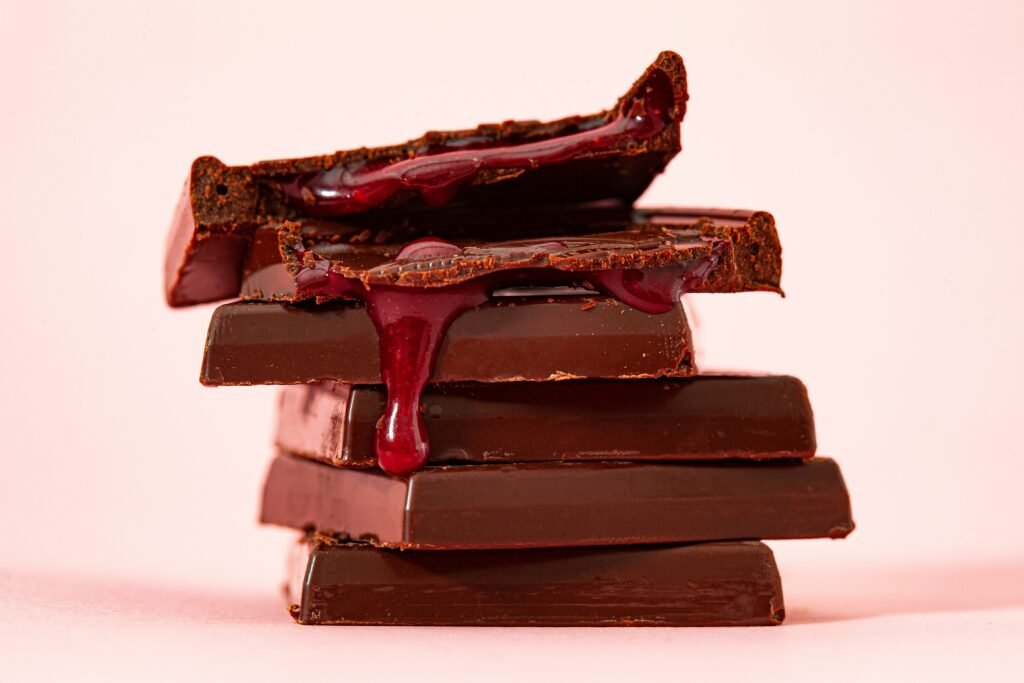
Do you like eating dark chocolate?
It’s a delicious and rich in taste edible that not only satisfies your sweet tooth but also helps boost your health and lower the risk of certain diseases like type 2 diabetes.
Look and behold! Is dark chocolate effective for lowering the risk of type 2 diabetes?
Yes, this is true and congratulations, if you’re fond of dark chocolate.
Research has proved that dark chocolate helps improve brain health, lowering high blood pressure and diabetes risk.
Researchers have claimed through their findings that eating nearly five ounces of dark chocolate every week lowers 10% risk of developing type 2 diabetes. People who ate at least 3 to 4 servings of chocolate weekly had a 21% lower chance of developing several diseases as compared to those who didn’t eat dark chocolate.
Do All Studies Support the Idea?
According to certain researches like a meta-analysis of 2021 had suggested that dark chocolate is associated with limited risk of some chronic diseases. Research findings aren’t consistent about dark chocolate preventing type 2 diabetes.
Therefore, no one can insist you to eat dark chocolate due to its uncertain health benefits, especially if the bitter flavor of dark chocolate doesn’t suit your taste buds.
In addition, some studies also suggest that there’s no link between dark chocolate and lower risk of type 2 diabetes. Researchers involved many older and middle-aged adults to check the results of eating chocolate daily for a month. The findings showed that taking cocoa extract daily for 30 days doesn’t reduce the risk of type 2 diabetes.
But still more research is required.
Thus, the last words had been included as dark chocolate, no doubt, is a nutritional power house with plenty of health benefits, even the lower risk of type 2 diabetes. Cocoa has antioxidant characteristics that help lower risk of many health conditions. But the findings are inconsistent.
Some observational studies have found that dark chocolate, not milk chocolate, is good for diabetic people. Milk chocolate has a minimal effect on diabetes risk. Instead, it causes an abrupt weight gain that is a great risk factor for type 2 diabetes.
Thus, the mixed research findings have suggested that all chocolates do not affect diabetes risks equally. So, if you love chocolate, keep in mind that you need to prefer dark chocolate over milk chocolate to get more health benefits.
What are the Effects of Dark vs. Milk Chocolate On Your Health?
Many health professionals follow-up studies have declared that the factors after the development of type 2 diabetes include body weight, and food habits. Over a period of 30 years. Dark chocolate consumption al;so starts showing its effects.
In 2021, nearly 112,000 diabetic people were involved in a study. They were given good food, a healthy lifestyle and dark chocolate. After one year the results were astonishing. Out of 112,000 diabetic patients 69000 were declared non-diabetic. But there was a twist that some of them had been given around 5 ounces of dark chocolate every day and some of them were given less than five ounces.
The comparison between the two groups, the one who consumed a rich quantity of chocolate and the subjects who rarely consumed it, showed that eating dark chocolate with a specific ratio can reduce the risk of type 2 diabetes up to 10%. Therefore, experts who consumed more quantities of dark chocolate experienced their greatest risk reduction. Research also confirmed that every serving of dark chocolate each week, reduces 3% of type 2 diabetes developing risk.
On the other hand, milk chocolate consumption results in long-term weight gain because milk chocolate is a rich source of added sugar and lactose.
So, there’s a stark contrast in the impact of dark and milk chocolates. On diabetes development risk and long-term weight management.
According to studies, dark chocolate contains a larger quantity of polyphenol content but it has a very low concentration of saturated fat levels. Polyphenols are recognized as best boosters for health outcomes. The comparative studies show that preferring dark chocolates over milk chocolate will introduce many positive health benefits. But the most important thing is to consume according to the recommended quantity. Because consuming a lot of chocolate even if it risks, can reverse the results and can impact your health badly.
Experts had noted that researchers had failed to provide specific data on the percentage of cocoa in chocolate. They also couldn’t give the specific brand names who use standard cocoa in their dark chocolate.
Therefore, there’s a need for further research. More conduction of randomized controlled trials among middle-aged participants can help identify the facts about dark chocolate effects on type 2 diabetes. The funding of such studies would help establish casualty and provide deeper insight into the underlying mechanic, controlling the mechanism.
Is Chocolate Consumption Consistent with Real-Life Dietary Habits?

Studies are limited on this topic. But some purchase data on chocolate consumption. This data was mostly collected through self-reports, which do not acquire real-life consumption accurately. Researchers already know the possibility of errors in the results. Therefore, they performed the same experiment three times. So that they may approach a near to correct result.
They included more women than men in the analytical survey. Most of them were white and over 50 years old. Another thing that made the group special is all the occupants were medical professionals.
However, the findings still cannot be generalized for all populations. Because participants actually consumed a fairly less quantity of chocolate compared to the national average based on data that researchers had examined. This is the reason, the researchers couldn’t assess the response association at higher intake accurately.
However, the apparent results showed that there was no statistical evidence to prove reduction in type 2 diabetes risk linked to eating chocolate, whether it is dark or milk. But some healthy professionals still believe that dark chocolate consumption is greatly linked with several health benefits.
In 2017, researchers proposed a theory about confounding effects of dark chocolate. In that study two groups had been observed. One who had been given a higher quantity of dark chocolate white the second one was given a lower or moderate quantity of dark chocolate. After a few weeks, a very small number of people developed type 2 diabetics who had consumed dark chocolate in higher quantities. Thus the results had confirmed that there was no modest association between eating dark chocolate and developing type 2 diabetes.
At last, the most noticeable thing is the analysis of sensitivity about some adjusted things such as added sugars and foods that can cause diabetes. This may help you understand the association between dark chocolate and type 2 diabetes.
However, more research is needed.
Why is Dark Chocolate So Healthy?
When you think of the composition of dark chocolate, you come to know that it has antioxidants in abundance. Antioxidants are responsible for reducing insulin resistance in people with type 2 diabetes.
According to research, antioxidants present in dark chocolate also help lower inflammation in diabetic people. These factors make dark chocolate a hurdle between you and type 2 diabetes. It is composed of a large amount of cocoa. I.e. around 50% while the milk chocolate contains very less quantity of cocoa but also rich in added sugar. Strides claimed that higher cocoa percentage and lower added sugar content is solid proof that dark chocolate helps lower risk of type 2 diabetes.
According to latest research, cocoa is a great reservoir of bioactive compounds including flavan. These compounds help improve insulin sensitivity and exhibit antioxidant and anti-inflammatory characteristics. Dark chocolate is also rich in polyphenol compounds that play a key role in reduction of type 2 diabetes risk.
Dark and milk both chocolate contain equal levels of sugar and saturated fats but they still play a different role in weight gain.
Though the exact mechanism is not known, it is confirmed that the polyphenols present in dark chocolate reduces the negative effects of sugar and saturated fats on weight gain and other cardiometabolic activities. This protective effect is very low or nearly absent in milk chocolate because it contains a very low amount of cocoa.
Many registered dietitians and nutritionists have explained further that dark chocolate is also rich in flavonoids unlike milk chocolate. Flavonoid is also found in epicatechin and catechin. The mechanism, here, is still unclear. But the confirmed theory states that flavonoids help improve insulin sensitivity by enhancing blood vessel cells function, regulating glucose metabolism and reducing oxidative stress. Flavonoids in dark chocolate actually inhibit production and action of certain enzymes. For example, the special enzyme, alpha-glucosidase, breaks down carbohydrates into glucose in your small intestine. Glucose absorption there can be slowed down by inhibiting the enzyme activity. This also helps prevent post-meal blood sugar spikes.
The effects of dark chocolate and its ingredients greatly contribute to reducing the risk of type 2 diabetes. These effects also are responsible for promoting your metabolic health but it doesn’t happen when you eat milk chocolate because it contains a large quantity of added sugar.
These factors support the theory proposed by a great dietitian Costa “dark chocolate contains 70% of cocoa content that is a powerful antioxidant as low in sugar as that of chocolate.”
That’s why dark chocolate has a lower glycemic index than milk chocolate that helps lower the blood sugar levels. It also happens due to the unique composition of dark chocolate like having healthy fats, powerful antioxidant flavonoid, a lower sugar content and higher percentage of cocoa butter.
Moderation is Key to Have a Healthy Life
A healthy life depends on your lifestyle and dietary choices but moderation is also key to success. Because sometimes, it is not enough to just choose good things but the next step to understand how much should be used is also very important.
The amount and way of use sometimes becomes a hurdle in getting desired results even in case of dark chocolate.
Dark chocolate is available around the world in many ferns, flavors, manufacturing procedure, quality and cocoa percentages. Sometimes, brands also use hidden ingredients like added sugar to enhance the flavor.
Though dark chocolate has many beneficial compounds and ingredients, some types of dark chocolates are also high in fat and sugar that are not the best recommendation for lowering risk of type 2 diabetes.
Therefore, people who are at risk of diabetes and type 2 diabetics should not eat dark chocolate more than five ounces per week. Everything works well in moderation. Same is the case with dark chocolate.
It is important to be careful while adding dark chocolate to your regular diet. You should choose the option with minimal added sugar. It is best to eat organic dark chocolate as a healthier option.
What are More Ways to Reduce Type 2 Diabetes Risk?
If you think swapping dark for milk chocolate is enough to reduce the type 2 diabetes risk, you are wrong.
If you’re at risk of developing diabetes, you should follow a low or no-carbohydrate diet. You can also prefer some social duties like a Mediterranean diet. Intermittent fasting or taking more dietary fibers also help reduce risk of type 2 diabetes.
Adding anti-oxidant foods to your budget is an effective way.
Some more antioxidant rich snacks include:
- Apples.
- Black or green tea.
- Berries.
- Cucumber.
- Grapefruit.
- Melons.
Certain lifestyle chives can also help lower type2 diabetes risk. So try to incorporate these habits to your routine life:
- Limit or avoid alcohol.
- Quit smoking.
- Perform regular exercise.
- Get 7-8 hours of quality sleep.
Conclusion
New studies have suggested that using dark chocolate in moderation can help reduce risk of type 2 diabetes. This means eating dark chocolate prevents blood sugar levels from spikes.
But it should be used in moderation with a balanced diet that is low in added sugar and carbohydrates but high in antioxidants. Healthy lifestyle habits like doing exercise regularly, reducing stress and having adequate sleep also help maintain your blood sugar level.