

Night time comes and provides you the opportunity to snuggle into the bed. You have completed your tasks of the day and now it’s time to turn out the lights and push back the covers. What about your sleeping position and how are you going to settle down under the covers?
The way you settle down on your bed for sleep is known as your sleeping position and it’s totally an habitual act. If your sleeping position is the same from your childhood, it has become a habit and you do it unconsciously without thinking about it. But if you are used to turning over to the side after falling on bed and keep switching between poses throughout the night to get more comfort, you properly know how sleep posture offers some important insight about your health.
Your sleep positions matter a lot for your health maintenance and several wellness outcomes are linked with it.
This article will help you explore the health benefits related to your sleep posture along wit some amazing facts about your sleep position such as how your sleep position tells about your personality and defines who you are. So keep reading for more insight.
ALSO READ: https://onlinehealthpoint.com/thyroid-eye-disease-graves-eye-disease/
How Your Personality is linked with Your Sleep Position?
Sleep position was not a hot topic a few years ago. People don’t think much about it and never consider it a thing to pay attention to. It is obvious that you also never rethink about your typical sleep posture and how it affects your health. You generally adopt a sleep posture due to a desire for optimal comfort . But sleep experts have claimed that sleep position also defines your personality and offers insight about your behaviors and traits.
Famous sleep experts have collected data after experimentation and uncover astonishing facts about personality and sleep position. The most important funding are:
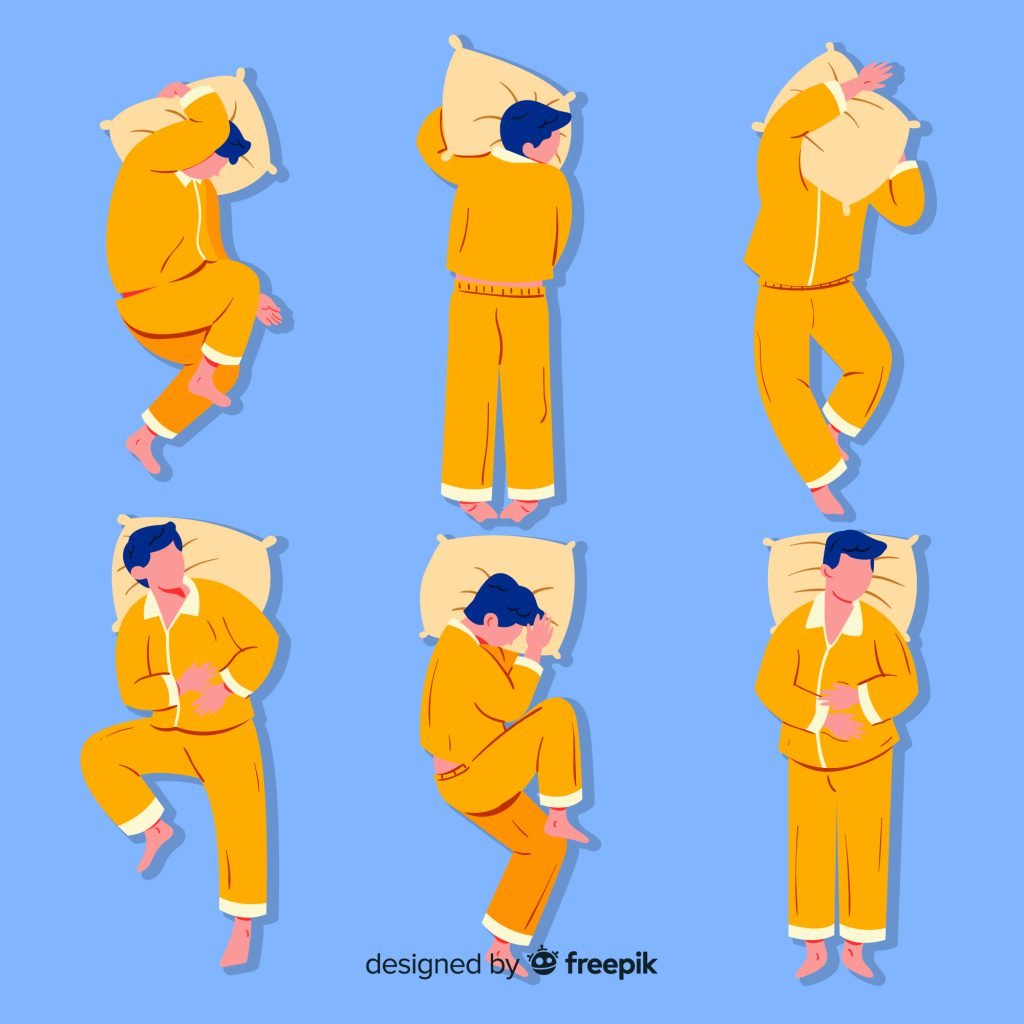
- If you sleep with your arms outstretched lying on one side, you are open-nature but a little suspicious. You may be a determined person who will stick to their decisions.
- If you sleep in a fetal position like most women do, you have a sensitive personality with a shyness fatir.
- If you sleep with your hands up or under the pillows, you are a sociable person but dislike criticism.
This information is not science based. Therefore, more research is needed to verify them. The research is limited and has several key limitations, such as:
- It only involves the experimented results of a small number of people as compared to the general population.
- As the experimentation proceeds. The above mentioned results started proving wrong. This means the results cannot be applied to everyone.
Better Sleep Council has conducted the latest research on the sleep position and personality traits. The yielded insights include the information:
- When you are used to sleeping on one side with both arms down, you may become more healthy and get enough sleep. This is also called log position.
- The next point of the research will shock you that people having graduate or upper level degrees prefer to sleep in fetal position.
- People belongs to the millennium generation or generation X mostly prefer stomach sleeping than baby boomers. While then z likes to sleep on one side with arms outstretched.
- Introverted people do not like to sleep on their stomach.
This shows that information collected after different surveys is not the same. In addition, sleep experts are also less certain about sleep position and personality.
However, some sleep psychologists are still trying to find out the reality about the linkage between sleep positions and personality traits.
How Is Your Health Connected with Sleep Posture?
Some science based evidence has been found that provides a link between your sleep position and certain aspects of your wellness and health. Sleep postures impact your health in both ways i.e positively and negatively.
The following information may help you learn more about how your sleeping posture affects your health.
Side Sleeping
Side sleeping is the effective way to relieve snoring and improve digestion, stooges suggested. Therefore, sleep experts often support this posture. Sleeping on your right side can make you experience some worsening symptoms like acid reflux and other indigestion issues while sleeping on your key side helps your stomach remain calm and comfortable. In this posture, your stomach lies below the oesophagus and stomach acid can’t rise up.
In addition, side sleeping is recommended to pregnant women as it helps improve maternal and fetal health. But the left side is favored because left side sleeping helps reduce heartburn, relieve pressure on the uterus and promotes blood flow.
Moreover, side sleeping also helps relieve lower back pain and improve spinal alignment. But people who have neck and shoulder pain find it difficult to sleep on one side.
Stomach Sleeping
According to the latest studies, the most beneficial sleep position is stomach sleeping. It has many benefits for the people who have sleep problems like chronic snoring, and obstructive sleep apnea. But it is also a reality that this posture is dangerous for your spine alignment and shoulder pain. Because when you sleep on your stomach, even after bed, the strain on your stomach increases and causes spinal misalignment and also causes lingering pain during daytime.
Back Sleeping
Studies show that both types of sleeping positions, side sleeping and stomach sleeping are associated with increased intraocular pressure that leads to an increase in risk factors of glaucoma. People with sensitive skin also experience more skin irritation, facial creases and breakout when they come in touch with a pillow. So, what next?
Enter Back Sleeping
Back sleeping posture benefits all age groups. Child specialists recommend back sleeping for infants as it reduces the risk of sudden infant death syndrome (SIDS). However, back sleeping is not always right for adults.
If you have obstructive sleep apnea, your airways repeatedly become blocked durg sleeping that increases the breathing problems during sleep. Back sleeping increases the risk factor for airways blocking thus increasing the breathing issues.
In addition, back pain and lower back pain, and neck pain get worse when you adopt back sleeping position. However, some people feel it is a relieving posture.
How to Optimize Your Sleeping Positions?
When you think about a sleeping post that has no risk factor and just helps you improve your sleep quality, you would fail in finding a single one.
Studies show that having trouble sleeping or waking up during night due to discomfort and pain points out the negative impacts of your current sleeping position on your sleep.
So, when you don’t feel any pain after waking up and get a good amount of peaceful sleep, you are sleeping in a good position. You don’t need to change it. But if you’re interested in learning about different sleeping positions and how to maximize the related benefits, you’re at the right place. There are many ways to sleep comfortably but the most common sleep positions include:
Back Sleepers
When yo sleep on your back, the chance of getting rid of different types of ps and discomfort increases. Back skiing lessens the pressure on your spine that results in good spinal alignment. It also helps distribute body weight evenly. That’s why nobody feels extra unbearable pressure. Therefore, many people prefer this posture for getting more restful sleep.
Back sleeping has more positive impacts on your wellness such as, you don’t need to press your face into your pillow every night, that helps you avoid premature facial wrinkles, pimples and rashes on skin.
Back sleep can be felt more comfortable when you keep a small pillow under your knees. This thing helps your spine to get straight and maintain its natural curve. Keeping small rounded pillows or cervical pillows around and below your neck while sleeping on your back relieve neck pain. Using a wedge pillow to elevate your head can help relieve heartburn, snoring and allergies.
Soldier
Do you like to sleep on your back with your arms down at your sides? You’re sleeping in a soldier position.
According to studies, soldier positions have many health benefits therefore you may not change positions again and again.
Starfish
People who sleep on their back with their legs slightly airy and arms up. They are starfish sleepers. A small percentage of people have been found with this sleep posture. Studies show that this position increases the risk of sleepwalking. When you sleep with your arms up your head especially with bent wrists is a great cause of tingling or numbness.
Side Sleepers
When you sleep on your side, you may experience reduced snoring, promote good digestion, boost brain health and prevent heartburn. Removal of sweat from your brain on a regular basis is necessary for your improved cognitive function. The trash is usually out when you sleep. Studies suggest that the cleanliness procedure is most efficient when you sleep on your side.
In addition, side sleeping also helps reduce back pain but shoulder tightness and pressure and tension in your head and face increase on side sleeping. You can get better results by getting a more comfortable and softener mattress that can provide you with a good pressure key and a firm pillow that can support the natural curve of the spine.
Keeping a pillow between your lower legs and knees can help relieve lower back and hip pains. For better arm sport, try hugging a large supportive pillow. It also matters what you sleep. Right side sleeping is good for relieving pressure on internal organs but it can increase the risk of acid reflux.
In addition, sleep experts also suggest left side sleeping is more comfortable and beneficial for the people who’re pregnant and living with different digestive problems. Another important thing about sleeping on your hands with bent wrists can lead to numbness or tingling along with worsening of carpal syndrome.
Log
Sleeping with your arms down at your sides is known as log position. This sleeping position lowers the risk of numbness but it’s not a popular sleeping pose. Studies show that people do not like this position and feel uncomfortable in this position. Similarly, starfish sleeping position also causes troubles such as walking.
It is said that log sleepers have been reported healthier as they get a fair amount of sleep than people who adopt other sleep positions.
Fetal
The most preferred sleep position is side sleeping that is also known as fetal pose. Women mostly like this position because sleeping like a baby prevents numbness, helps bending and curling your wrists. You also don’t need to keep one hand under the pillow. This posture helps keep your chin and limbs relaxed.
Yearner
According to a survey reports, sleeping on one side with arms outstretched is a popular sleeping posture that is also known as yearner pose. This sleep position is considered helpful in preventing extra pressure on your hands and wrists. The position also helps you adjust your arms if you feel numbness or tingling during sleep.
Stomach Sleepers
Experts generally suggest acid sleeping on the stomach as it triggers neck and back pain. Sleeping while keeping your neck always in up position causes stiffness in your neck.
If you feel the stomach position is comfortable for you, try other poises. Keep the pollution of the head changing regularly to avoid always facing right or left.
In addition, choosing a soft, flat pillow also helps prevent neck pain. You can also keep a pillow under your pelvic region to lessen the pressure on your neck while sleeping in your stomach.
ALSO READ: https://onlinehealthpoint.com/does-chatgpt-give-reliable-health-advice/
Conclusion
It is a hot topic among sleep experts that sleeping position affects your personality and health. Many sleep positions actually help predict the personality traits of people. But recent research is not enough to verify the theory. More research is needed to prove that sleeping position can tell much about your health and personality.
On the other hand, many sleep experts also deny any link between your sleep position and health. They also say that your sleep position doesn’t have much to do with your personality.
However, if a specific sleep motion is causing problems like numbness or tingling in your limbs or neck and back pain, you should avoid this posture and try another. You can get proper guidance from a sleep specialist to have a good sleep that fulfills your sleep needs.